Sunday, February 21, 2016

Brutally Honest Self Assesment

I am proud of the final project that I released. The real question is whether or not I'm proud of how I managed my time while completing it.

The answer to that is "sort of."
via ItsyBitsySteps

This past month is kind of a blur at this point so I'll speak to my experience this week, because it pretty closely resembles every week.

I block off about ten hours to work on English blog posts every weekend, usually split between Saturday and Sunday. Sometimes, like this week, I get started on a Friday or even a Wednesday. When I work on earlier days, it takes me forever to get anything done.

For example, for this week's blogs you told us to count our verbs and track how we used them. I spent an hour and a half debugging a code that would go through my essay, find the verbs, and change them to their infinitives. Then, it would print out a nice list from which I could plot a frequency distribution and answer the big 2 point question.

Counting the verbs myself would have taken ten minutes.

I call it "productive procrastination," but it's still procrastination. Now I'll have that code ready if you want us to to do the same thing on another assignment, which is good. But I still spent an extra hour and a half sitting in front of my computer when I should have been colleging. Don't even get me started on analyzing my syntax trees.

I felt rushed on most Sundays because I made myself finish by nine to get to all the other homework I had left for myself. I'm taking twenty three credits this semester, and four of my classes have Sunday deadlines. I need to get better at managing my time during the week because the extent of my weekend social life has turned into going to the water fountain so I can make mac and cheese.

If you ever need a program that can syntactically parse your essay, make lists of active and passive verbs, and provide synonyms to every "bland" piece of vocabulary in your essay, let me know. Who knows? Maybe my sad weekends alone will be the future of revision. 

Local Revision: Variety

Image result for computer nerd
via MerchantCircle
The most important thing I've learned today is that I'm awful at objectively judging my own work. I went through the Rules for Writers reading and tried to follow it. However, every time I noticed a common sentence pattern (like sentences starting with "however") I kind of ignored it because I liked the sentence.

I used this really cool, free parsing software so that the computer could tell me how repetitive my sentence structure is. I also used the Natural Language Toolkit (Python 2.7 or above) to run a frequency distribution on my written vocabulary. You can use this code to run a plot of your most common words: 


>>> fdist1 = FreqDist(text1) [1]
>>> print(fdist1) [2]
<FreqDist with 19317 samples and 260819 outcomes>
>>> fdist1.most_common(50) [3]

and, if your writing resembles Moby Dick, you get something that looks like this: 


[(',', 18713), ('the', 13721), ('.', 6862), ('of', 6536), ('and', 6024),
('a', 4569), ('to', 4542), (';', 4072), ('in', 3916), ('that', 2982),
("'", 2684), ('-', 2552), ('his', 2459), ('it', 2209), ('I', 2124),
('s', 1739), ('is', 1695), ('he', 1661), ('with', 1659), ('was', 1632),
('as', 1620), ('"', 1478), ('all', 1462), ('for', 1414), ('this', 1280),
('!', 1269), ('at', 1231), ('by', 1137), ('but', 1113), ('not', 1103),
('--', 1070), ('him', 1058), ('from', 1052), ('be', 1030), ('on', 1005),
('so', 918), ('whale', 906), ('one', 889), ('you', 841), ('had', 767),
('have', 760), ('there', 715), ('But', 705), ('or', 697), ('were', 680),
('now', 646), ('which', 640), ('?', 637), ('me', 627), ('like', 624)]


I separated my observations into "before technology" and "after technology." Also, the language trees that the Stanford parsing software produces weren't working with Blogger so I got this example from another free source. 

Iusedthisreallycool,freeparsingsoftwaresothatthecomputercouldtellmehowrepetitivemysentencestructureis.
detnounprposnounnoun
,SUBJv-auxverbhowadjSUBJverb
prondetadvadjOCONadjnounnounfsucPHNpronSUBJPHN
SUBJverbNP[used]SUBC[used]NP[tell]WHAT[tell]
PHPepunct
SEN

Before Technology:

I noticed that I really like complex sentences and commas. In my QRG, I also added short, simple sentences between the more complex ones. When I don't revise I'm not quite as carful. I also use a lot of qualifiers. 

My vocabulary was pretty colorful and vivid. I expected my QRG to be about 50% 

After Technology: 

 I tend to start my complex sentences with prepositional phrases. These typically "set the scene" for the main verb, which occurs at the end. I also really like gerunds. 

When I ran the numbers, I found out that only 58% of my writing was "syntactic glue" (words like the, a, this, my, etc.) In most corpuses that I've run it's at least 60-65%. Does that mean my writing has substance? 

My most frequently used words were names of people and countries, plus the word "academics." Basically, I talked a lot about the key stakeholders. That's not a bad thing. 

Saturday, February 20, 2016

Local Revision: Pronoun Usage

via imgur
I only used eight pronouns in my QRG, which is four pages of raw text. Every pronoun that was used had the subject explicitly stated earlier in the sentence or in the sentence before. This surprised me because I've noticed that I can use confusing pronouns in speech. I think my limited pronoun usage was partially due to the rounds of revision I've subjected my QRG to.

I didn't directly address the audience at all in my QRG. Second person would probably be more appropriate in a podcast or video, or if my controversy directly impacted my readers' lives. I considered titling a subsection section "Why should I care?" but decided against it.

My controversy ultimately affects the people of Turkey and surrounding countries, especially those involved in academia. Both of those points are clearly included at the beginning of the QRG. People who are concerned with Middle Eastern politics or the freedom of academic expression would see that and continue reading. Anyone looking for a story that will directly impact their own life would be disappointed in this article. 

My Pronouns


Upon opening the instructions for this blog post, I sighed at the prospect of another tedious session of word counting. I didn't think I would ever be this happy about how few pronouns I use. 
Russia:
via Pinterest

  1. His (Erdoğan’s)
  2. They (the academics)
  3. They
  4. Him (Noam Chomsky)
  5. He (Erdoğan)
  6. She (Jülide Yazıcı)
  7. They (Kurdish Workers Party (PKK))
  8. Their (Turkish Kurds)

Local Revision: Passive and Active Voice

The majority of my verbs are active and specific. Most of the general verbs are surrounded with details and vivid context. Quite a few of my sentences aren't as engaging as an action movie, but I'm not entirely sure how to describe oil trade in a way that is. 

All of my passive verbs are used when the object of the verb is much more important than the agent. Four out of my five cases of passive voice describe what happened to those who signed the letter. I will consider changing one sentence about how many people signed the letter into active voice. 

I used "called for" a few times in my QRG. "Demanded" is a much stronger verb so I may change those. I'm pretty happy with my existing verb usage, though.

PUTILOVE
via Redjon

Active (General) Active (Specific) Passive
startedcriticizedwas signed
killedimposedwere placed
gave (a speech)accusedhave been fired
called for (2)fightingwere detained
causedhijackedwas arrested
describedforcing
purchasingattack
allowingdecried
harmeddemanded
workmassacre
chooseclaimed (2)
providedenied
usesbuilt
knowawaiting
immigrated
escalated
promised
attacked
cooperate
condemns
relies
ignored

Local Revision: Tense Usage

I primarily used past tense when describing the actual event. However, the scandal is part of an ongoing global conflict so I used present tense when describing current events, opinions, and how the rest of the world may be affected by this.

It wouldn't make sense to readers to describe the specific events in present tense. However, explaining how governments and individuals feel about this scandal in the present tense gives the reader a front row seat to a currently unfolding story. Also, describing global events in the present tense inspires a sense of urgency. The reader feels like they should care.

Transitions between past and present tense within the same paragraph are easy to follow because I often use present perfect instead of past in this case.
Redfern

Past TensePresent TenseFuture Tense
startedcriticizewill encourage
killedbeing
gaveattacking
responded (2)are
signed (2) is (6)
criticized (2)want
imposedsupport
accused (2)are
hijackedare fighting
couldforcing
wasfund
receivedtend
decriedbe
calledclaim
causedcannot
demanded


is
builthas
placedwork
firedmust
detained (2)relies
goneprovides
detainedusing
arrestedconsider
condemnedcondemns
is
escalatedknows
promisedallowing
attacked
preserved
harmed
criticized
ignored

Friday, February 19, 2016

My Verbs

RadiantSkies. NaturalLanguageProcessing. 

Tip for Readers: Counting verbs is hard. Four minutes of coding can do this entire assignment for you.

I wasn't sure if computational linguistics would ever be relevant in my academic career. Thankfully, my wonderful English instructor wanted me to make a list of all of my verbs, then tally them. I'm usually terrified of computers, but right now I'm thanking God for the Natural Language Toolkit (NLTK.)

Besides variations of "be," which were most often used as auxiliary verbs, the verbs used in my QRG were very low frequency. The vast majority were used only once.


Verb List: 
['mean', 'start', 'kill', 'give', 'accuse', 'criticize', 'be', 'attack', 'respond', 'circulate', 'sign', 'criticize', 'impose', 'are', 'is', 'accuse', 'being', 'want', 'support', 'are', 'fight', 'has', 'hijack', 'force', 'fund', 'smuggle', 'want', 'does', 'halt', 'could', 'respond', 'weaken', 'was', 'attack', 'receive', 'was', 'tend', 'decry', 'attack', 'want', 'call', 'cause', 'demand', 'abandon', 'commit', 'held', 'sign', 'sign', 'calling', 'claim', 'defend', 'accuse', 'is', 'respond', 'was', 'bomb', 'claim', 'criticize', 'take', 'describe', 'call', 'deny', 'claim', 'built', 'is', 'is', 'were', 'place', 'fire', 'detain', 'gone', 'were', 'detain', 'spread', 'criticize', 'fear', 'respond', 'urge', 'honor', 'have', 'reside', 'is', 'face', 'escalate', 'promise', 'liquidate', 'has', 'face', 'purchase', 'allow', 'attack', 'is', 'has', 'crack', 'attack', 'attack', 'harm', 'have', 'criticize', 'work', 'support', 'declare', 'choose', 'rely', 'provide', 'use', 'attack', 'consider', 'is', 'condemn', 'worry', 'provide', 'encourage', 'know', 'let', 'ignore']

Verb Frequency

14: ['be']
7: ['attack']
5: ['criticize']
4: ['respond']
3: ['accuse', 'sign', 'want', 'has', 'call', 'claim']
2: ['support', 'detain', 'face']
1: ['mean', 'start',  'kill', 'give', 'circulate', 'impose', 'fight', 'hijack', 'force', 'fund', 'smuggle', 'do', 'halt', 'could', 'weaken', 'receive', 'tend', 'decry', 'cause', 'demand', 'abandon', 'commit', 'hold', 'deny', 'defend', 'bomb', 'take', 'describe', 'build', 'honor', 'fire', 'place', 'go', 'spread', 'fear', 'urge', 'reside', 'escalate', 'promise', 'liquidate', 'purchase', 'allow', 'crack', 'harm', 'work', 'declare', 'choose', 'rely', 'provide', 'use', 'consider', 'condemn', 'worry', 'encourage', 'know', 'let', 'ignore']


Local Revision: Wordiness

Most of my sections were already relatively concise because I shortened them during the revision process. The new section uses more present tense active voice, resulting in a quicker read. I originally cut about 25% of the section, but then added in a few sentences to clarify details for the reader.

With the exception of three or four sentences, all of my sentences are simple, short, and digestible. That's very important for readers in this context because the content is complicated on its own. This way, readers can focus on digesting the material instead of piecing together the meaning of complex sentences.

via memecenter
Original Section:
What does this have to do with ISIS?


In early February President Erdoğan criticized the United States for supported Syria’s Kurdish warriors, the YPG. They work closely with the Kurdish Workers Party (PKK) in Turkey, which has effectively been at war with the Turkish government for over thirty years. In early February, the Turkish president declared that western powers would have to choose to cooperate with Turkey or the Kurds, not both.


NATO has been relying on Turkey as an ally against ISIS. The US government has been providing Turkey with weaponry and money that the country has been using to attack the Kurds in both Syria and Turkey.


Both Turkey and the US officially consider the PKK a terrorist organization. However, only the Turkey condemns Syria’s YPG. The government is worried that increased power and weaponry provided by the US will encourage Turkish Kurds in their quest for political autonomy.

But the Kurds-- specifically the Peshmerga in Iraq and the YPG in Syria-- have been the world's most effective force against the so-called Islamic State. The US Department of Defense has known about this for months but, because Turkey is letting the US attack Syrian targets from the American airbase in Adana, the conflict of interest has been ignored.

Revised Section:

What does this have to do with ISIS?

President Erdoğan recently criticized the United States for supporting Syria’s Kurdish warriors, the YPG. They work closely with the Kurdish Workers Party (PKK) in Turkey, which has been at war with the Turkish government for thirty years. The Turkish president declared that western powers must choose to cooperate with either Turkey or the Kurds.

Both Turkey and the US consider the PKK a terrorist organization. However, only Turkey condemns Syria’s YPG. The government is worried that increased power and weaponry provided by the US will encourage Turkish Kurds in their quest for political autonomy.

The Kurds-- specifically Iraq's Peshmerga and Syria's YPG-- have been the world's most effective force against ISIS. However, NATO relies on Turkey as an ally against ISIS. Western governments provide Turkey with money and weaponry that is intended to slow and prevent ISIS territorial gains. However, Turkey often uses this money to attack the Kurds in Syria and Turkey.

The US Department of Defense has known about the attacks for months. However, Turkey allows the US to attack Syrian targets from the American airbase in Adana, so the conflict of interest has been ignored.


Friday, February 12, 2016

Peer Review 2

President Bush Photograph Office.
George H W Bush at Age One and One-Half.
 1925
I reviewed David's video essay draft  and Eren's QRG draft. My review for Eren can be found here and David's can be found here.

The clearest thing that I noticed is that it is much easier to show your personality in a video essay than in a QRG. I was worried that any sarcasm or borderline funny comments about genocide wouldn't read very well in a QRG and I was right. Also, it's very clear which aspects of this project have been well researched and which ones haven't. If I thought I could slide by with a few "a lot"s and "many"s before, I know that I can't now. Each one whittled the author's credibility. It's interesting that it's not really something you can build in one project, but you can definitely destroy it.

Strengths 

1. My initial draft is consistent with QRG structure.
2. I was able to (almost) adequately explain a very complex situation in a digestible way.
3. I'm educating my peers about a very important issue that they probably wouldn't have otherwise heard about. That's enough for me, even if I don't get a good grade on this project.

Weaknesses

1. My draft does not provide the amount of background information that the average reader probably needs. Neither the scandal nor the underlying conflict garner much attention in the media.
2. I don't clearly explain the motivation of all of the stakeholders.
3. I need to add in graphics and interesting formatting. 

Tuesday, February 9, 2016

Peer Review 1

Antonio Litterio. Power of Words. 2011
I reviewed Tim's college essay. Reading it gave me a new perspective on my own story and writing.

I was worried that my passion for the topic surrounding my story would overshadow the story itself. I removed somewhere between half and three quarters of what I had written to see if the story could stand on its own. It couldn't. Tim clearly embraced his passion for the subject, and it came through in his nine page essay. Knowing a lot about a subject isn't a bad thing. I don't necessarily need to provide nine pages of information, but providing answers to questions that readers should be asking is what a good writer would do.

Tim's essay had a clever title. I need a clever title.

One thing that I noticed in Tim's writing that wouldn't fly in a QRG is the flowery language. I felt like I was in a theater as the plot was unfolding. I mentioned it as a critique in my comments, but it might work in his piece. I, however, will need to go through my drafts and make sure my writing is concise. It usually isn't.

Also, the formatting didn't follow the traditional format throughout the whole essay. He clearly took writing directly from blog posts and added them into the writing, but I'm assuming he'll fix that this week.

Sunday, February 7, 2016

3.11 Draft of Project 1


Here's the copy I've written for Project 1. It will be in Quick Reference Guide format, but I'm going to add diagrams, images, and pretty formatting during the post-production stage. I removed most of the information about the existing conflict in order to focus on the story. If you think it could use more information (maybe in sidebars, etc.) please mention it in the comments.

I essentially want the copy to be readable and understandable to an average audience. If I didn't explain some acronyms or organizations, please let me know.

MikuRC. I'm Done.

3.8 Stakeholder #3

Kurdish Women Diyarbakir. Fakundo Guillen. 2015
At 20 million people, the Turkish Kurds are just a slightly narrower stakeholder in this controversy than academia as a whole. Since the creation of the Turkish Republic after World War I, the Kurds have been oppressed. Usage of their language was banned both in public and in the home for decades in an attempt to wipe out their cultural identity.

The Turkish government has the most to gain from this power play, but the Kurds come in at a close second. International organizations are learning about an issue that is usually avoided when talking about Turkey. Only specialized news sites reference the decades long conflict that has been keeping Turkey's population in check.

With international sympathy typically comes more aid and resources. Also, more attention to this conflict may pressure Turkey into some kind of political compromise.

The government's treatment of the Kurds was the necessary tinder for this international controversy, nobody is writing how the Kurds feel about this. Even the Kurdish outlets are equally objective and snarky. This Kurdistan24 article just describes the whole debacle as a set of expected "Erdoğanisms":

"The hysterical reaction reveals the extent to which violence has become a conventionalized and ritualized political weapon for Justice and Development Party’s (AKP) propaganda against real or imaginary enemies."


"The belligerent tirade instigated by AKP is inflaming Islamist bigots, fascists, and even criminals to take matters into their own hands." He then goes on to explain how the organized crime boss Sedat is threatening academics. 

"The Academics for Peace Petition was merely a symbolic gesture in defense of peace and freedom of expression. More and more academicians, journalists, and human rights activists are becoming victims of AKP’s venomous propaganda and its witch-hunt every day." 


3.6 Stakeholder #1


Jülide Yazıcı
Jülide Yazıcı
Jülide Yazıcı was one of the first three detained at the beginning of this controversy. She is an undergraduate philosophy student at the most prestigious university in Turkey with flowing hair, a sweet smile and compassion for stray dogs.

She's been accused of "spreading terrorist propaganda," but the only crime the public thinks she committed is being an optimistic, naive young adult. Seven thousand people have signed a petition calling for her release. She's not just a philosophy student anymore, she's the Turkish face of Academics for Peace. She represents everyone who have lost their jobs or been forced into hiding.

Most signatories have remained silent on the issue since government's backlash. Jülide was detained for criticizing the government response on social media, after all. Although the signatories have reason to afraid, outsiders on social media are demanding justice. #JülideYazıcıyaÖzgürlük (#FreedomforJulideYazıcı) was trending on twitter last month. 


Initially, the academics were calling for the "punishment of those responsible for human rights violations," and for journalists to be allowed to "monitor and report on the incidents of violence."

 The letter quotes the Amnesty International statistic of 200,000 people living under 24 hour curfews, with many unable to access food, medical care, or clean water. 162 people, including 32 children, have died under these curfews, either from starvation, lack of medical care, or violence.

The language choice (especially the English translation) is abrasive. But I trust Amnesty International and the few videos being smuggled out of Eastern Turkey.

"We, as academics and researchers working on and/or in Turkey, declare that we will not be a party to this massacre by remaining silent and demand an immediate end to the violence perpetrated by the state." 

 The fiery language used in the initial Academics for peace letter has faded into calls for mercy.


Saturday, February 6, 2016

3.7 Stakeholder #2

To his conservative voters, Recep Tayyip Erdoğan is an esteemed, religious man. To his opposition and most of the international community, he is an oppressive force on Turkey that is dragging the secular country back into Ottoman times. He has the well rehearsed rhetoric of America's best politician, but is as slimy and corrupt as our worst.

File:Vladimir Putin and Recep Tayyip Erdoğan (2015-06-13) 3.jpg
Встреча Президента России Владимира Путина с Президентом Турции
 Реджепом Тайипом Эрдоганом в Баку.

June 2015
Few Turks were surprised with Erdoğan's response to the Academics for Peace letter. Whenever a government scandal arises, the Turkish government shuts down social media. Erdoğan claimed that he would "wipe out Twitter" when proof of his corruption was leaked.

In Erdoğan's defense, the Turkish government has been trying and failing to contain the situation in Southeastern Turkey. He and his advisors know that inciting fear will prevent people from attacking or publicly criticizing the government. It's a power move similar to violently shutting down the Gezi Park protests in 2013.

No one expected this harsh reaction to a group of academics exercising their academic freedom. However, Erdoğan believes that "those so called academics need to know their place" and that they are "dark, demented people."

This is a man who uses the word to terrorist to describe those who speak against him or expose his corruption. This is a man who, when called a dictator, sues his own people. This is a man who doesn't want to release his loosening grip on the country he already may have lost.

"Turkey will fight [Kurdish] terrorism until the last weapon of the last terrorist is placed on the ground."

3.2 Analysis of My Rhetorical Situation

A Simple Timeline of My Topic. Leah Crowder
I'm about to attempt the impossible. I will guide you through my rhetorical situation without a diagram. Luckily, I already drew a diagram for THIS rhetorical situation. 

The most difficult question to answer is why I'm writing this.  Well, if I don't I'll fail first year English and probably die alone. 

I could have easily chosen a much easier topic to write about. I could have avoided spending fourteen hours (so far) gathering and analyzing sources in three different languages, one of which I barely speak. But if I did that, I would pass up an opportunity to tell a funny story and educate my peers about the oppression and massacre of our most important ally against ISIS.

I hope to portray an extremely complex and long-standing issue in a digestible way for my audience, while still focusing on the controversy. I want to provide enough information for readers to discuss the issue at cocktail parties. I doubt most people will research the Turkish-Kurdish conflict after reading my QRG, anyway. 

The obvious author is yours truly. But that begs the question: who am I? I am a fan of puppies, skydiving, and long walks on the beach. Is that enough information? 

Here's a list of why I'm both too biased to write and the perfect author to do so: 
  • This semester I am the only college student in America studying Kurdish. 
  • Most of what I've read during the past year focuses on the Kurdish conflict, political linguicide, and genocide. If we still got points for reading books I would have to thank a lot of oppressive regimes for giving me so much reading material. 
  • I'm invested in the linguistic and cultural revitalization of Kurdish after speaking the language was illegal for decades. I've made enough public statements about to make it really, really hard for me to get visas from the Turkish embassy. 
  • Erdoğan called Noam Chomsky-- the father of modern linguistics-- a terrorist. As an aspiring linguist and devout follower of Chomskyan theory, I am personally offended. 
  • President Erdoğan ranks higher than Putin on my list of most despised world leaders. Then again, I'm pretty sure that moment Putin and I made eye contact sealed our fate as soulmates. 

Now that I've trashed my own credibility on the issue, it's time to get into the other points on our rhetorical triangle. 

I know I have at least one audience member (shout out to Bottai who is required to read this!) I'm assuming that anyone else who stumbles upon this work is vaguely interested in the Middle East or genocide , but know very little about Turkey's relationship with its Kurds.

My target audience is somewhat educated and financially well-off. At the very least, they read the International section of at least one major publication. Since this will be in QRG format, I assume that readers will either be millennials or busy professionals.

If, however, one of the four people with Ph.D.'s from Exeter in Kurdish Studies finds my project my life will be complete. 


3.5 The Big Event

Leah Crowder. Sultanahmet 2015.
On January 12, 2016 Sultan Ahmet Square was buzzing as tourists shuffled into the legendary Blue Mosque. Mid afternoon an explosion shook the square, leaving behind a singing haze and the smell of burning flesh. Ten European tourists died and centuries old Ottoman architecture was destroyed. The culprit was soon determined to be an ISIS affiliated suicide bomber.

A few hours later, Erdoğan stepped into the press room of his Ankara offices. Journalists from local and international publications were anxiously awaiting a call to action against the so-called Islamic State.

Instead, Erdoğan went after the “so-called academics.” The president claimed that those who criticize the Turkish government are the worst terrorists of all. Reporters hurriedly took notes as the President described the hundreds of academics who publicly called for peace in Eastern Turkey as “dark” and “demented.”

Erdoğan denied any responsibility for the decades long Turkish/Kurdish conflict. He claimed that the fact that the government built (now crumbling) roads in majority Kurdish cities is proof that the government is benevolent.

The president said that all foreign signatories of the declaration “We Will Not Be a Party to This Crime” are ignorant and don’t deserve their positions of academic prestige. He singled out American academic and father of modern linguistics Noam Chomsky, accusing him of spreading terrorist propaganda in the US.

The president didn’t mention ISIS once.

All Turkish signatories were immediately placed under federal investigation. Dozens have been fired from their jobs, twenty seven have been detained, and many have gone into hiding. International academic organizations have

Friday, February 5, 2016

3.9 The Setting

    Six crimson Turkish flag hang on gold staffs behind the empty podium. Conversation in an intriguing melody fills the room-- Turkish, French, English, German, Arabic, Persian. Although at least ten percent of the reporters in the Ankara press room are likely Kurdish, not a word of the language makes an appearance. It's still illegal to speak Kurdish in government buildings, anyway.

Roosewelt Pinheiro/ABr.
Brazillian President Lulaand Turkish Prime Minister
   Young women in printed headscarves dart through the room delivering complementary tea and Turkish coffee. Even the robust, earthy coffee can't calm the reporters' anticipation. Maybe some pistachio chocolate tea cookies? Those don't help either. It's incredible how lively the journalist crowd gets right after a suicide bombing.

   While reporters nibble on cookies and debate what the Turkish president will say, Erdoğan's aid calls for silence. The president has returned from afternoon prayer. The exhausted head of state steps up to the mahogany podium and delivers a speech that no one was expecting.

Wednesday, February 3, 2016

3.10 The Time Period

Mohammad P. Kurdish Refugees. 
Since the beginning of Syria's civil war, an estimated 1.9 million Syrian refugees have been residing in Turkey, primarily in the southeast. The conflict with the Kurds escalated with the end of a temporary ceasefire with the Kurdish Workers Party (PKK) in 2015. The ceasefire ended just one day after Erdoğan promised to "liquidate" the group.  The Turkish government has also been facing severe international criticism for knowingly purchasing oil from ISIS and allowing people with ties to the terrorist group through the border. The morning Erdoğan gave this speech, an ISIS affiliated suicide bomber attacked the country's largest tourist attraction. The Turkish government's grip on the country is loosening quickly. The government has a history of cracking down on free speech during times of crisis or scandal. Attacking the academics who attacked them likely seemed like a logical move.

Local: Canlı Bomba (live bomb) video
Local: Erdoğan's Fight with the Academics

National: Davutoğlu's response to the bombings
National: Violence in Diyarbakir 

International: Istanbul Explosion Kills 10 Tourists
International: PKK Ends Unilateral Ceasefire with Turkey

3.4 My Sources

In order to make this more accessible to my audience, I tried to cite all English language sources on this blog post. In my opinion, nine out of ten isn't bad. The sources that I'm using to show the government's perspective and the atmosphere on the ground are from Turkish media, but all of these will be incorporated as well. 

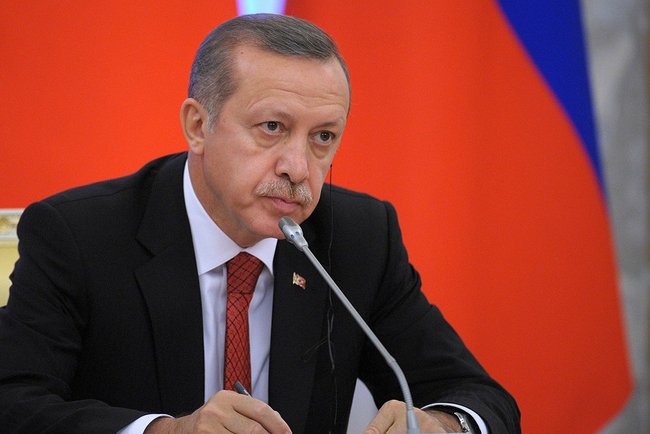
File:Turkish PM Recep Tayyip Erdogan.jpeg
Turkish PM Recep Tayyip Erdoğan. Wikimedia. 

1. Erdoğan's Speech


Although the link to my first source is a Guardian article, I'm only using the audio file that was embedded into the article. It was the only live English translation of Erdoğan's speech that I could find. The translator was from Al Jazeera, and that audio was taken and embedded into the article. One of Turkish President Erdoğan's staff probably wrote it for him, but for these purposes I'm going to consider him the author.

This speech was the initial spark that led to all of the controversy. It was given just hours after a suicide bombing in Istanbul killed ten foreign tourists, but focused on academics who signed an open letter about the crimes against Kurds in Turkey. He calls all of them ignorant terrorists, but Western media probably wouldn't have gotten involved if Erdoğan hadn't singled out one of America's most famous academics-- Noam Chomsky.


2. The Actual letter


Although it's unclear who the original author of this letter is, "We Will not Be a Party to This Crime" was signed by 1,128 Turkish Ph.D. holders and candidates, and 356 international academics (as of January 13). The letter demands a lift of 24 hour curfews, the end of the "deliberate massacre of Kurdish people," compensation for victims and their families, and for journalist to be allowed into areas of conflict. 

The Voice of Jiyan describes itself as "a radical media experience focusing on news and developments from Europe and the Middle East." It may not be the most reputable source for objective news, but it provided an exact copy of the letter in multiple languages as well as up to date signatory numbers. Plus, the online declaration itself has been hacked and blocked by the Turkish government. 

The only author provided in the article is "Jiyan." Writers for this site probably want to protect their identities. Writing "radical" news in or about the Middle East is enough to become a target for violent backlash. 

3. Philosophy Student Arrested In Turkey


The Daily Nous is an online publication dedicated to "news for and about the philosophy profession." For this reason, they focused on the arrest of Jülide Yazıcı, a philosophy student at the most prestigious university in Turkey. She was one of the first three signatories arrested for "spreading terrorist propaganda." The petition for her release has 7,100 signatures as of February 4, 2016.

This article was released on January 31, as the aftermath of this controversy was still unfolding. Since then over twenty signatories have been detained. The article isn't extremely up to date, but it provided a great lens into how an individual was affected, instead of just giving numbers.

The author, Justin W., holds a Ph.D. in philosophy and regularly posts advice columns for philosophy grad students. He also analyzes new developments in the field of philosophy for the site. He has no clear connection to Turkey or the Kurds.

4. US Embassy Turkey Tweet


The US government very rarely criticizes Turkey publicly. We turn a blind eye to their attacks on the Kurds because they are our only NATO ally in the Middle East and, arguably, our second strongest ally against ISIS. Ironically, our current most important ally is the Kurds. 

Anyways, my point is that it takes a lot for our State Department to speak against Turkey. The current ambassador, John Bass, has remained even more silent than his predecessors. This tweet came out on January 15th, just a few hours after reports of 27 academics being detained.  

5. Yarın Haber Article


This article was posted on 2/3/2016 and written by Fadik Temizyürek. She has been a journalist for over ten years and seems to usually write political analysis pieces.

Yarın Haber (translation: News of Tomorrow) is an "independent" Turkish news organization. I put independent in quotes because all major publications, including this one, are heavily influenced and manipulated by the Turkish government.

This article describes the disciplinary procedures in place for signatories working at public universities, specifically Ankara University. It provides some specifics about the legality of signatories' participation in this letter. However, the essential piece of information from this piece that investigations of 121 faculty members have been opened and that some people are probably going to get fired.

6. American Sociological Association


On January 29, 2016, the American Sociological Association got itself involved by writing a letter to Turkish Prime Minister Davutoğlu. The ASA doesn't take a stance on the content of the Academics for Peace declaration, but does demand that Turkey drop all legal charges against signatories.

They describe the actions of the Turkish government as an attack against academic integrity and freedom of expression. The letter is signed by past ASA president Paula England (professor at NYU),  current president Ruth Milkman (professor at CUNY Graduate School), and president elect Michele Lamont (professor at Harvard University.) These three women are more than qualified to publicly discuss this attack on academic freedom.

7. Turkey Rounds Up Academics


According to this article on the Guardian, which is cited in the British International Studies Association's (BISA) public statement, all 1,128 Turkish signatories are under investigation. They have already faced significant backlash from nationalist students and faculties at their institutions and, if convicted, will face up to five years in prison. Turkish prison isn't a fun place to be.
The article was published on January 15, 2016 by Matthew Weaver. Before he joined the Guardian in 2001 he was the senior editor of an architecture magazine. Most of his recent stories are about US involvement in the Middle East, specifically Syria. 

The Guardian is a British newspaper dating back to 1821. It is currently owned by Scott Trust Limited, which doesn't seem to have any special interests in the Middle East. 

8. Turkey: Where Calling for Peace is Terrorism 


This article was posted on KurdishQuestion.com on January 22nd. It gives a great general overview of the situation while focusing on details that most other news organizations ignored. One signatory of the letter, Ayse Çelik, called into a popular Turkish talk asking people to look into the issue before believing what the media says about academics. Çelik is now being prosecuted for terrorism and the TV show is being investigated for spreading "terrorist propaganda."

The author of this article, Rosa Burç is a Ph.D. candidate at the University of Bonn in Germany studying nation-states and nationalism theory. Kurdish Question produces very little of its own material and instead pulls analyses from think tanks and short articles from other news outlets. This specific article was pulled from TeleSUR's website, a pan-Latin American television headquartered in Venezuela.

9. Protests Against Erdoğan in Ecuador 


Turkish President Erdoğan faced large protests for his treatment of Kurds during his recent trip to Ecuador. His bodyguards ironically responded by attacking women who were chanting "violence out." The article was published on February 5th.

The news website Bianet was created by Ertuğrul Kürkçü, a left wing activist who is currently the honorary president of the HDP (majority Kurdish political party.) It is funded by the European Commission through their Instrument for Democracy and Human Rights.

The video that the website used was published by NOKTA (a Turkish media organization), but was essentially just live coverage from an Ecuadorean news channel.

10. Turkey Detains 21 signatories of academics for peace.


This piece was published on Vice News on January 15th, just a few days after Erdoğan publicly called the Academics for Peace group terrorists. It gives limited details about the academics who had been detained at that time, all from Kocaeli University near Istanbul.

The author attributed to this article is "Reuters and Vice News" -- they do not name a specific journalist. No large company owns a majority share of Vice Media and, in the article, they seem pretty neutral. They acknowledge how ridiculous the arrests sound but also bring up recent Kurdish violence.